
A Humpy is a useful fly when you want a substantial dry-fly profile and a pattern you can follow through broken water. Its distinctive raised back and bushy dressing make it a familiar searching pattern for trout streams, especially when fish are willing to look up but there is no obvious hatch to match.
For fly shops, guides, and anglers buying by the dozen, Humpies can fill a practical role alongside Adams patterns, caddis imitations, and smaller hatch-specific dries. The goal is not to stock every color in every size. It is to choose a selection that suits your water and the people fishing it.
What makes a Humpy different?
The traditional Humpy uses hair pulled over the body to form its characteristic hump, with upright wings and a generous hackle dressing. That construction gives it a fuller silhouette than many slender dry flies.
Think of it primarily as an attractor or general searching pattern rather than an exact imitation of one insect. It can suggest a substantial food item on the surface without matching every detail. That is useful when covering likely holding water, but less useful when trout are selectively feeding on tiny insects or low-riding emergers.
When to reach for a Humpy
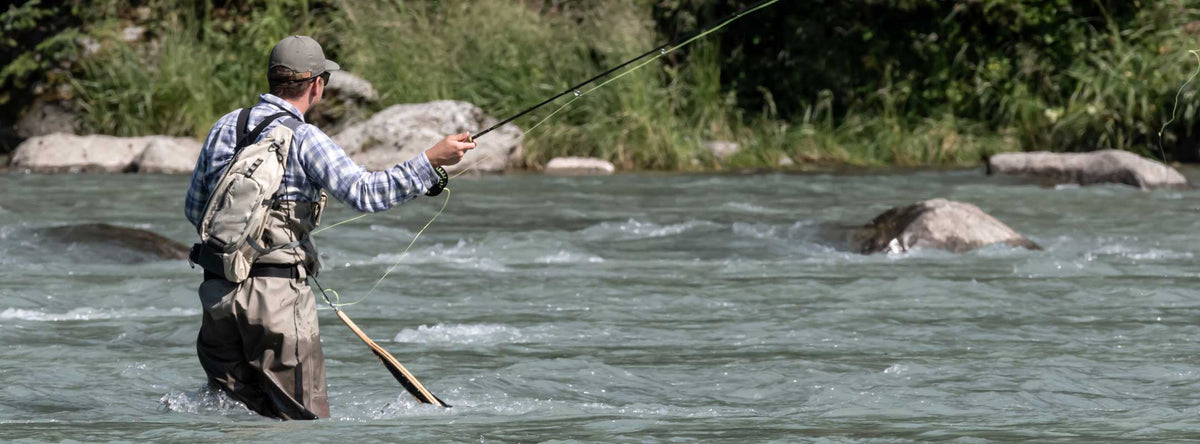
Riffles, pocket water, and small freestone streams are sensible places to try one. Look for softer seams beside faster current, pockets behind rocks, and shaded edges where trout have cover and a feeding lane.
A Humpy is also worth considering when you need to search water between hatches. Cover promising spots with controlled drifts rather than repeatedly casting over the same patch. If fish rise to inspect the fly but refuse it, check for drag, then consider a smaller size or a less bulky pattern.
Do not confuse a buoyant-looking dressing with unlimited flotation. Turbulent water, repeated casts, and fish slime can still sink a dry fly. Dry and maintain it as needed.
Choosing Humpy colors
Yellow: a sensible starting point
A yellow Humpy is a familiar starting choice for a general searching assortment. Let local experience determine how much space it deserves in your box or shop bins.
Our Humpy Yellow Dry Flies are offered by the dozen in sizes 10-16.
Red and chartreuse: alternative attractor choices
Red and chartreuse give you alternative body colors when building a searching selection. Neither is automatically better than yellow, and a brighter body does not necessarily make the whole fly easier to see in every light condition.
Our Humpy Red Dry Flies and Humpy Chartreuse Dry Flies are offered by the dozen in sizes 10-16. Add them according to angler preference and results on local water rather than expecting color alone to solve a presentation problem.
Black: a darker profile
A black version gives you a darker body option alongside brighter colors. Surface light and viewing angle affect how both anglers and fish see a fly, so avoid rigid rules about which color belongs under which sky.
Our Humpy Black Dry Flies are offered by the dozen in sizes 10-16.
Royal: another attractor option
The Royal Humpy belongs in the same searching-pattern conversation. Choose it as an alternative attractor, not because it promises a better catch rate than other Humpies.
Our Humpy Royal Dry Flies are offered by the dozen in sizes 8-16, providing a larger size option within this selection.
Choosing a useful size range
In standard hook numbering, a size 16 is smaller than a size 10. Hook size does not specify the exact finished length of a fly, and a Humpy's full dressing can make it appear substantial relative to a slimmer pattern on a similar hook.
Sizes 12 and 14 are a reasonable starting pair for a general assortment. Add size 16 when a smaller profile is useful, or sizes 10 and 8 where a larger searching fly makes sense. Those are planning suggestions, not a replacement for observing local insects and fish behavior.
Choose size for the presentation you need, not simply the size of the trout you hope to catch.
Barbless choices and careful handling
Our Barbless Humpy Yellow Dry Flies and Barbless Humpy Chartreuse Dry Flies are offered by the dozen in sizes 10-16.
Barbless hooks can make unhooking easier and may be required on particular waters. Check local regulations before fishing. A barbless hook does not replace good handling: minimize time out of the water, handle fish with wet hands, and release them carefully.
Getting a clean drift
Keep casts short enough to control the line. Place the fly so it drifts naturally through the feeding lane, and manage slack before the current pulls it across the surface. Changing your position or casting angle often helps more than changing colors.
Use an appropriate floatant according to its directions. After catching a fish, rinse slime from the fly and dry it before treating it again. If it keeps sinking, switch to a dry replacement rather than repeatedly coating a waterlogged fly.
Buying Humpies by the dozen
For a fly shop or outfitter, begin with yellow in locally useful sizes and add other colors as customer demand develops. Include barbless options where regulations or customer preferences make them relevant. Guides can prioritize extra dozens of the sizes they regularly use rather than spreading purchases evenly across the range.
Clubs and individual bulk buyers can plan around upcoming trips and shared waters. Lodges and destination resorts stocking a small fly selection can keep the assortment focused, with clear size labels and a brief explanation of where to try each pattern.
A useful Humpy selection does not need to be complicated. Start with a few purposeful choices, fish them with attention to drift, and use local feedback to decide what earns a permanent place in the box.